
Did you know that when most Ugandans hear the name Xiaomi? One thinks smartphones, right?. Affordable, solid, and reliable smartphone. That’s a wrong assumption because in 2024, the Chinese tech giant did something that honestly shocked everyone. They built a proper electric car. And not just any car. A car that’s making people who buy Mercedes, Teslas, and hybrid cars actually stop and think.
Here’s the thing. Most of us in Uganda have been following Apple rumors for years. “Oh, Apple’s making a car.” Nah, nothing happened. Meanwhile, Xiaomi quietly delivered. They didn’t mess around. They hired former BMW engineers, brought in design consultants, and actually built something that competes with Tesla and Porsche. That’s wild when you think about it.
The Company That Refuses to Stay in One Lane
Xiaomi started in 2010 as a phone company. Lei Jun and his team built it into the second-biggest phone maker globally, right behind Samsung. But phones weren’t enough. Around 2021, they launched Xiaomi Auto. The goal was simple: use the same innovation mindset that made them huge in phones and apply it to electric vehicles.
Why? Because the EV market was the future, Xiaomi saw the opportunity and took it. They saw Tesla dominating, traditional automakers scrambling, and thought, “We can do this better.”
Meet the SU7, Xiaomi’s First Real Move
The Xiaomi SU7 launched in March 2024. I’m not exaggerating when I say this thing turned heads. It’s a four-door sedan that looks sleek, almost like someone took a Porsche Taycan, toned it down, and gave it a minimalist vibe. The drag coefficient is just 0.195, which means it cuts through the air like nothing. That’s important because it means better range, which we’ll talk about in a second.
They gave you three options. The base RWD has 295 horsepower. The Pro model. And then the Max, which is the one that actually caught attention. Six hundred sixty-four horsepower. Zero to one hundred kilometers in two point seven eight seconds. That’s faster than most sports cars you see on Kampala roads.
The Max comes in at 101 kilowatt-hours. Range? Eight hundred kilometers on a single charge. That’s Kampala to Fort Portal and back without breaking a sweat.
What the Tech Reviewers Said
Marques Brownlee, the biggest tech reviewer on YouTube, got to test it. And you could tell from his reaction that he was slightly surprised, too. He went in thinking, “Okay, Xiaomi’s first car, let’s see what they messed up.” But there wasn’t much to complain about. The interior is clean. The tech works. It actually feels premium. That matters because when a reviewer like that doesn’t find problems, it means the problems are genuinely small.
Why This Actually Matters for Uganda
Here’s where it gets interesting for us. You’re probably thinking, “Obux, this is a Chinese car. It’s not coming to Uganda anytime soon.” Fair point. But hear me out.
The SU7 starts at around 15,200 dollars for the base model. The Max is about $30,000. That’s expensive, yes. But it’s cheaper than a Tesla Model S, which costs almost $100,000. And it’s in the same ballpark as a high-end RAV4 or a premium Camry, which Ugandans with real money are already buying.
Here’s the real question, though: could this ever work in Uganda? Let’s be honest. Our charging infrastructure is basically non-existent. You’ve got maybe two or three charging stations in Kampala, and they’re not exactly convenient to use. Our electricity grid is unreliable. Load shedding happens. If you own an EV, you need to charge at home, and that means having reliable power.
But, and this is important, that’s changing. Slowly. Solar is getting cheaper. More people are installing solar at home. The grid is improving. In five to ten years? Electric cars may become more practical in Uganda.
The Real Comparison: Xiaomi SU7 vs Tesla Model S
Let’s talk numbers because that’s what matters to someone considering dropping serious money.
The Xiaomi SU7 Max takes 2.78 seconds to go from 0 to 100. The Tesla Model S does it in 2.3 seconds. Xiaomi loses that round, but not by much.
The SU7 Max has a range of 800 kilometers. The Model S? Six hundred fifty kilometers. Xiaomi wins here.
Horsepower: SU7 Max has 664. The Tesla Model S has 670—basically the same.
Price: This is where Xiaomi wins decisively—thirty thousand dollars versus nearly one hundred thousand dollars. If you’re an affluent Ugandan who can actually afford a premium sedan, that price difference is significant.
The Design That Actually Makes Sense
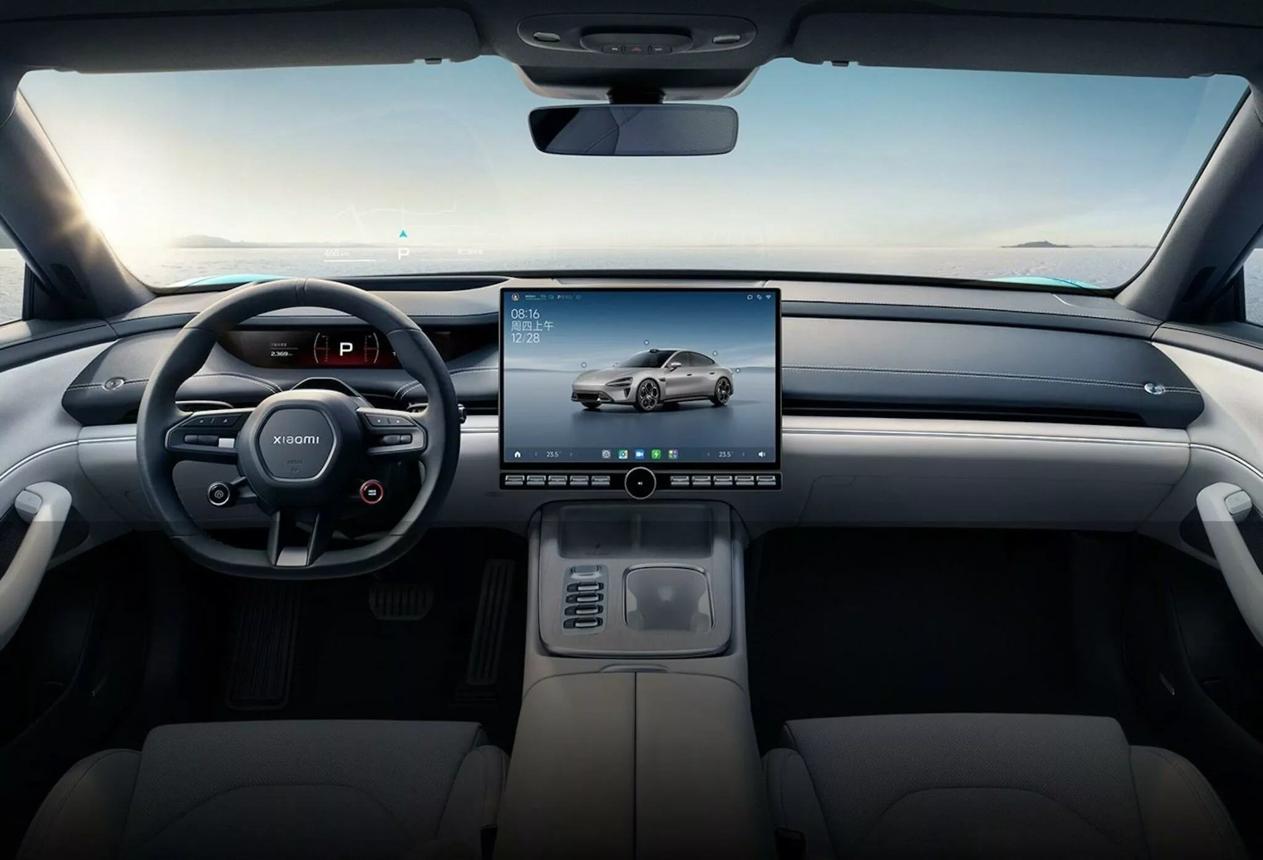
Something I appreciated about the SU7 is that it doesn’t try too hard. It’s not trying to look like a spaceship. It looks like a proper car, just a really well-executed one. The panoramic windshield is huge, so visibility is excellent. The cabin is spacious because the battery sits flat underneath, which means no transmission tunnel takes up legroom.
They even thought about aerodynamics. Flush door handles. Side skirts. Extraction vents behind the wheels manage airflow. These aren’t flashy features, but they’re the kind of details that show Xiaomi actually thought about engineering, not just marketing.
Can It Come to Africa? The Real Talk
Probably not soon. Xiaomi’s focused on China and Europe right now. They’ve mentioned global expansion around 2027, but Africa isn’t on that radar yet. The infrastructure isn’t there. The service network doesn’t exist. And honestly, the market isn’t big enough yet for them to prioritize.
But here’s what I think matters: Xiaomi proved that you don’t need to be Tesla to build a competitive EV. Good engineering, smart design, and heavy investment can make a difference. This should inspire Ugandan readers to believe that local innovation and adaptation are possible, even if the market isn’t fully developed yet.
The Bottom Line
Xiaomi is no longer just a phone company. It’s competing in one of the most complex industries in the world against established players like Tesla, Porsche, and BMW. And it’s doing it successfully.
For Ugandans with serious money who are currently looking at RAV4s or high-end Camrys, the SU7 represents what’s coming next. Maybe not tomorrow, but soon enough to warrant paying attention. The future of cars is electric. The future is also more affordable than we thought. And Xiaomi just proved that.